nbn Developments
Mapping the reality behind a major service transformation
- Client
- nbn
- Project
- New Developments
- Services
- Service design · Research · Journey mapping · Prototyping
- Role
- Lead experience design / service design
The challenge
The process view did not show what happened in practice
A major transformation was underway. Before the future service could be designed and built, the organisation needed reliable evidence of how the current service actually worked.
That evidence would inform future architecture, platforms, integrations, workflows, user flows and service design. But the existing high-level process view did not show the detail, dependencies or workarounds teams needed to make those decisions.
We mapped the service end to end with the people delivering it, creating a shared current-state view grounded in how the service operated in practice.
What we did
Mapped the current state across the development lifecycle
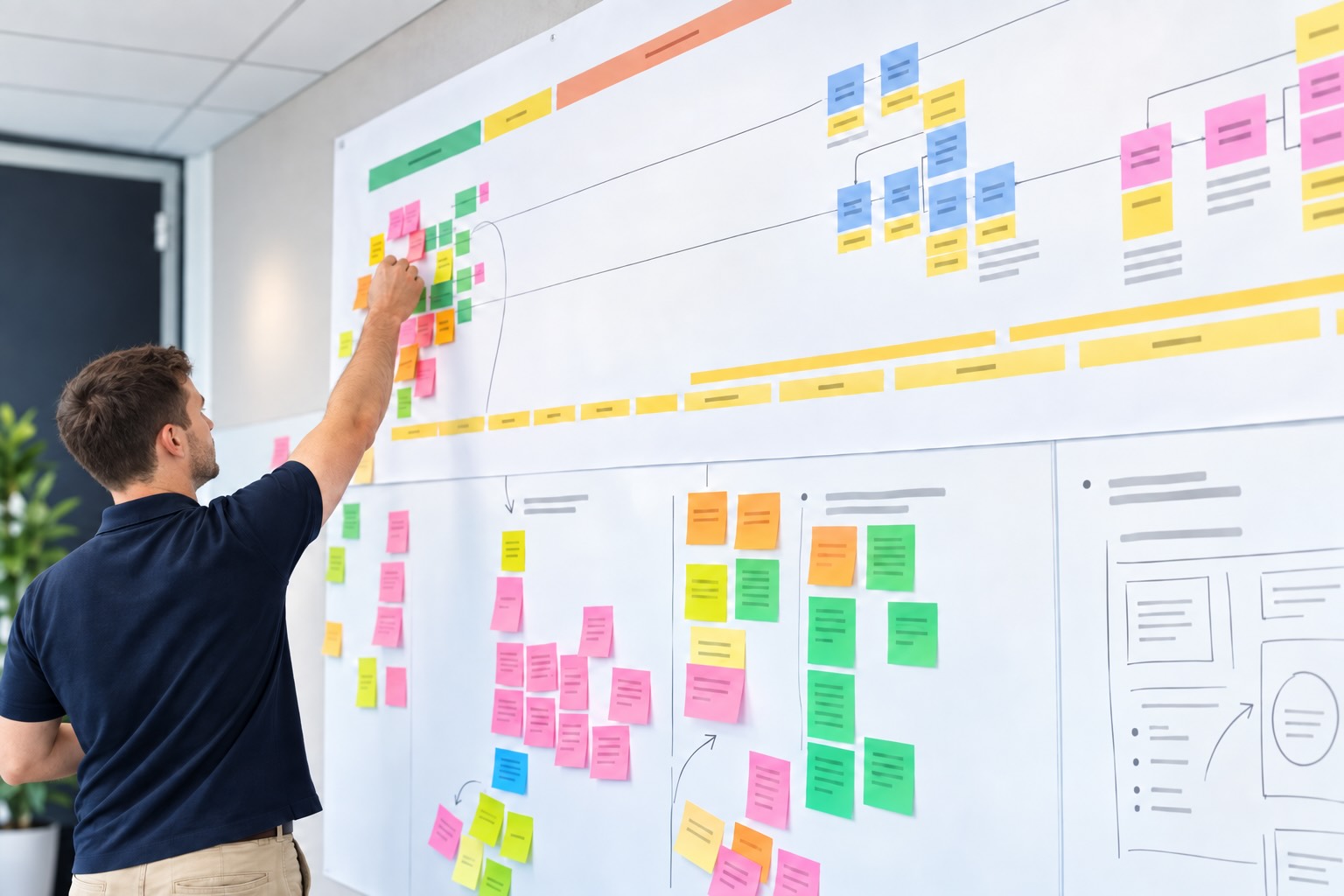
Pixelkind planned and led a series of onsite and virtual cross-functional workshops across the end-to-end development lifecycle, from application and assessment through contracting, design, build and activation.
We brought together people from commercial, sales support, finance, planning, engineering, delivery, operations, architecture and assurance to map how the service actually worked across teams, handovers and systems.
Each journey was explored through multiple workshops and targeted deep dives, combining customer feedback, process and system knowledge, and the experience of the people delivering the service. The resulting current-state view was validated with relevant teams, exposing pain points, workarounds, dependencies and gaps between the intended process and how the service operated in practice.
What we found
The complexity crossed teams, processes and technology
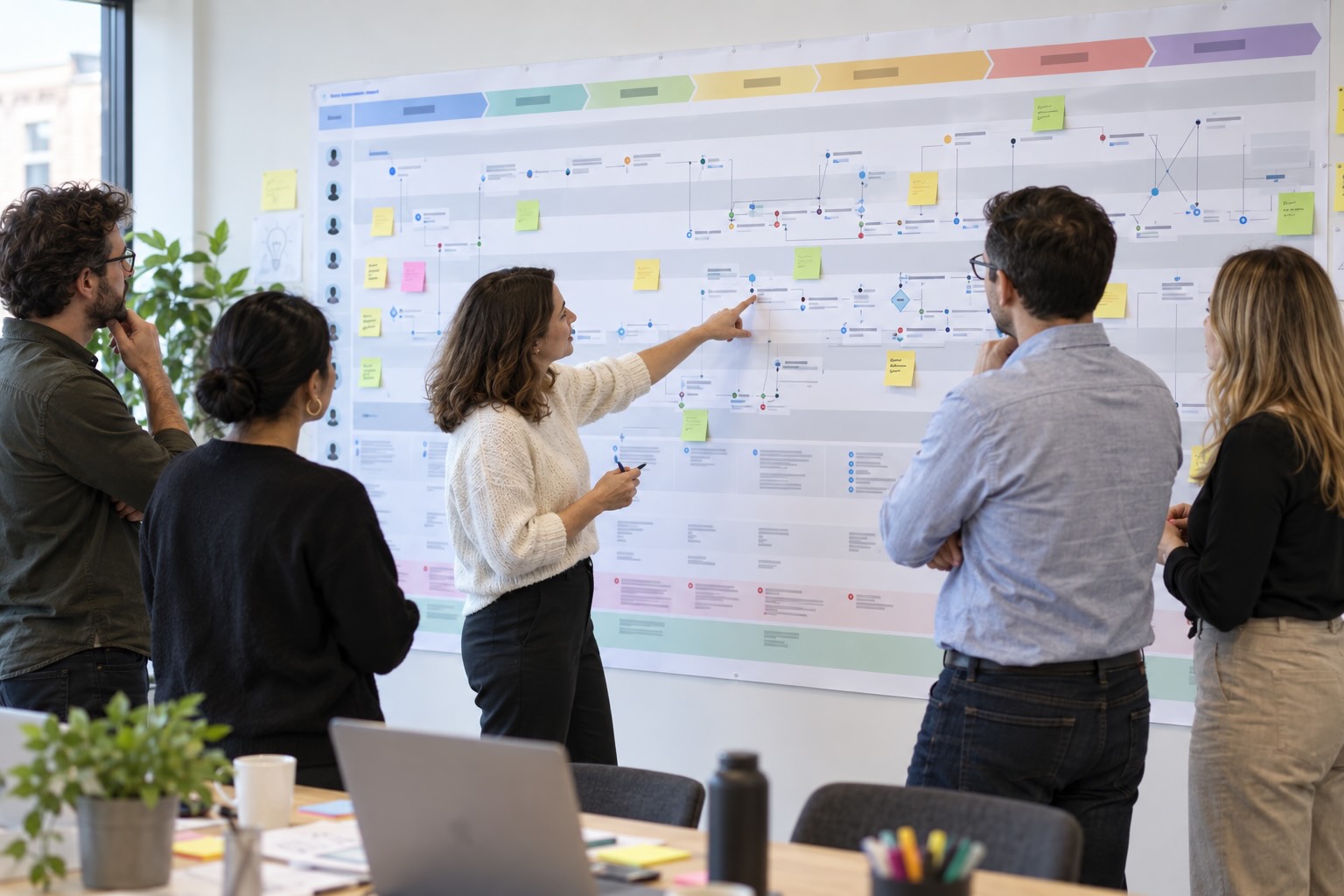
The detailed current-state view exposed complexity that was difficult to see in the existing high-level process view.
This included unclear ownership, manual workarounds, duplicate handling, system dependencies, exception paths, inconsistent status language and gaps between what customers experienced and how the service operated internally.
Many of these problems were not confined to a single team, process or system. They crossed organisational and technology boundaries, which meant they needed to be understood as service problems rather than isolated issues.
From insight to action
Shared evidence became a tool for change
The current-state maps became working tools for the transformation, giving teams a shared view of the service and evidence to support decisions about architecture, platforms, integrations, workflows, requirements and priorities.
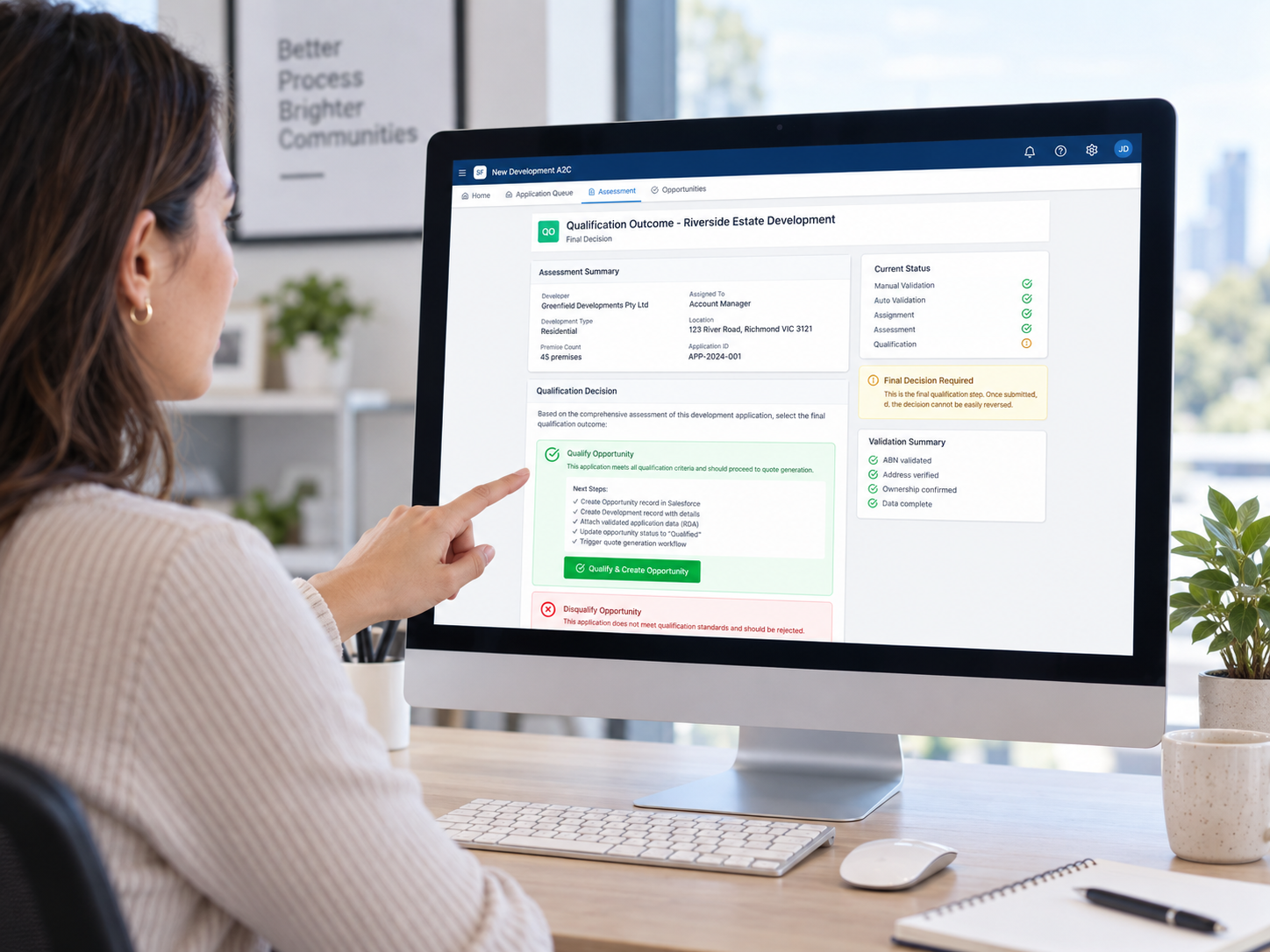
We also used Figma Make to translate the journey mapping into an interactive software prototype that reflected key Salesforce workflows and behaviours. This allowed architecture, product and delivery teams to assess future-state concepts rapidly, test assumptions and validate proposed changes with stakeholders before committing to build.
Value
A shared evidence base for what came next
The work gave nbn a shared evidence base for a service that crossed much of the organisation.
It made visible where the service was breaking down, where responsibilities, processes and systems did not align, and where change needed to be considered across the wider service.
That evidence informed architectural decisions, platform priorities, experience design and investment discussions across the transformation.
From a high-level process view to a current-state model teams could use to make decisions, prioritise change and shape what came next.